The Golden Island · A Chapter

Dionís Bennàssar

Pollença, 1904 – 1967

Every other painter in this story arrived in Pollença. Bennàssar is the one who was produced by it. Formed by the town rather than drawn to it, he entered the same conversation as the artists who came from elsewhere without ever leaving home.

Others came to Pollença and discovered in its landscape a new artistic world. Bennàssar did not have to discover Pollença. He was formed by it.

I · Formation

The town that produced him, not attracted him

Every major name associated with Pollença arrived from somewhere else, with means, training, or both.

Hermen Anglada-Camarasa came in 1913 with an international reputation already secured. Tito Cittadini came from a family of comfortable means, studied under Anglada in Paris, and followed him to Mallorca by choice. Rusiñol, Mir, and the wider Hispano-American cohort arrived the same way: they had the freedom to go where the light was, and they went.

Dionís Bennàssar Mulet had none of this. He was the fourth of six children of a Pollença peasant family so poor that the household abandoned its land before his first birthday. At five he was sent to mind pigs and chickens. His schooling ended early. Twice he encountered formal artistic or religious instruction: an offer of continued schooling from the Theatine Fathers, and a spell of drawing lessons in Palma funded by work as a mechanic. Both times he refused it or was expelled from it, in revolt against the classicism being taught. The academic shorthand an art school installs in a student's hand was never installed in his.

He arrived at painting, in other words, from the opposite direction to everyone else in this story: not drawn from outside by report of the light, but already inside it.

II · The Wound

What the Rif War changed, and what it didn't

He volunteered in 1923, at eighteen, because he wanted to fly.

An aviation school was forming in the Balearics, and he enlisted hoping to join it. He never did. In 1924 he shipped instead to Spanish Morocco with Primo de Rivera's campaign in the Rif War. Where his contemporaries reached the wider world through scholarships and family money, he reached it through conscription. His diary records the conditions with a sardonic exactness already recognisable as the sensibility of his painting: ship's biscuit dated 1911, barracks with no water or electricity, an order to fire relayed down the line with no visible enemy.

I confess I never saw an enemy in front of me.From his diary, on his first combat

On the last day of 1924, during a blockhouse operation, he was shot. The bullet entered his right clavicle, shattering it and permanently weakening the arm. He spent five months hospitalised at Larache, and a severe depressive collapse in that period marks, in his own later writing, the datable origin of his break with religious observance. He was discharged in 1925 and returned to Pollença with a state pension, an invalid's status, and no profession.

With the right arm weakened past reliable use, he relearned his craft with his left hand, and painted with it for the remaining forty-two years of his life. The injury did not simply alter his life. It altered the physical conditions under which he painted. Gestures that had once been automatic had to be reconsidered, and a hand that had never been trained now did the work a trained hand refuses out of habit. What he saw with it, not the hand itself, is the interesting story.

One episode resists the general bleakness of the diary, and he chose to write it down: lost and disoriented in an anxiety state, he was found, cared for, and returned by a Moroccan couple, the population his own army was there to subdue. He concluded that he had learned, for the first time, that soldiers also have hearts.
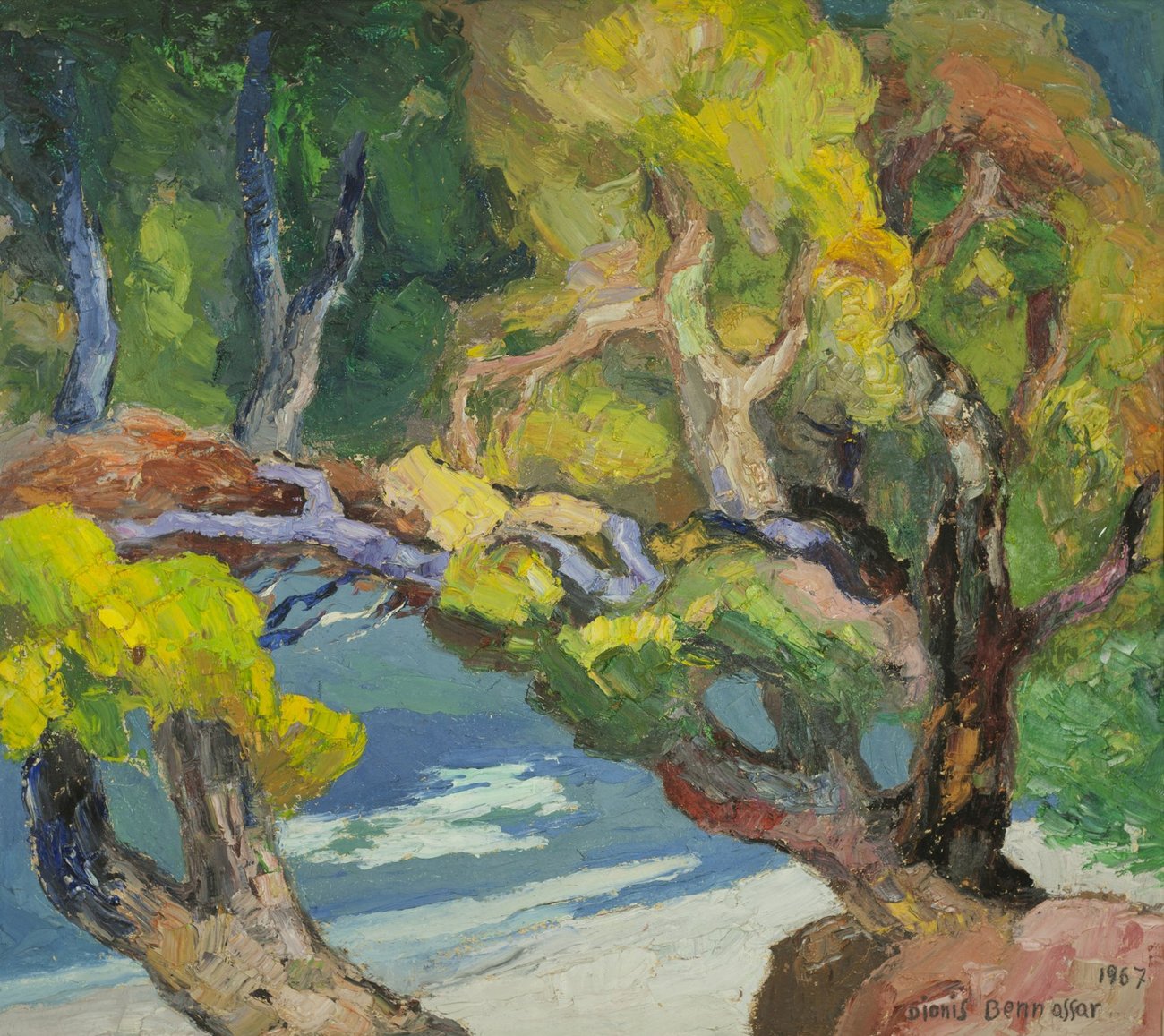
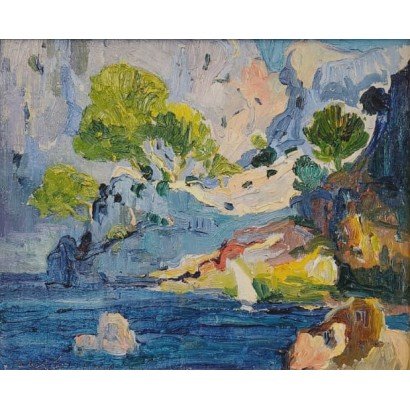
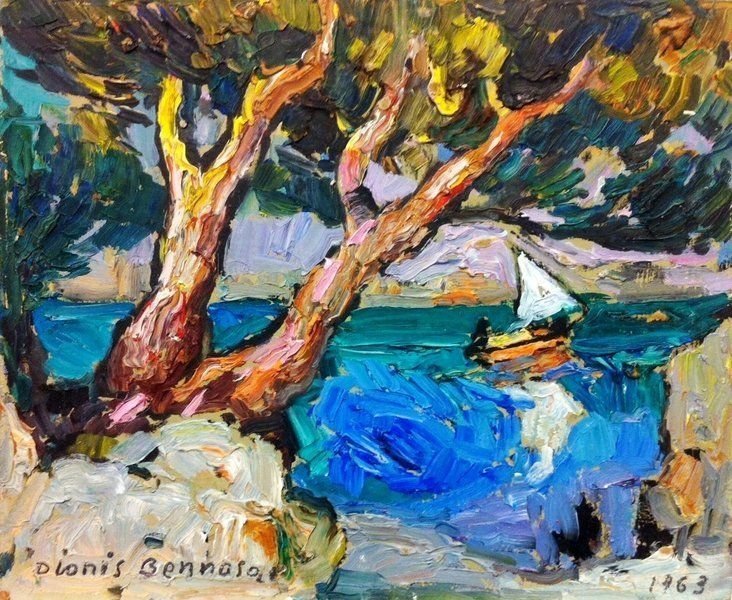
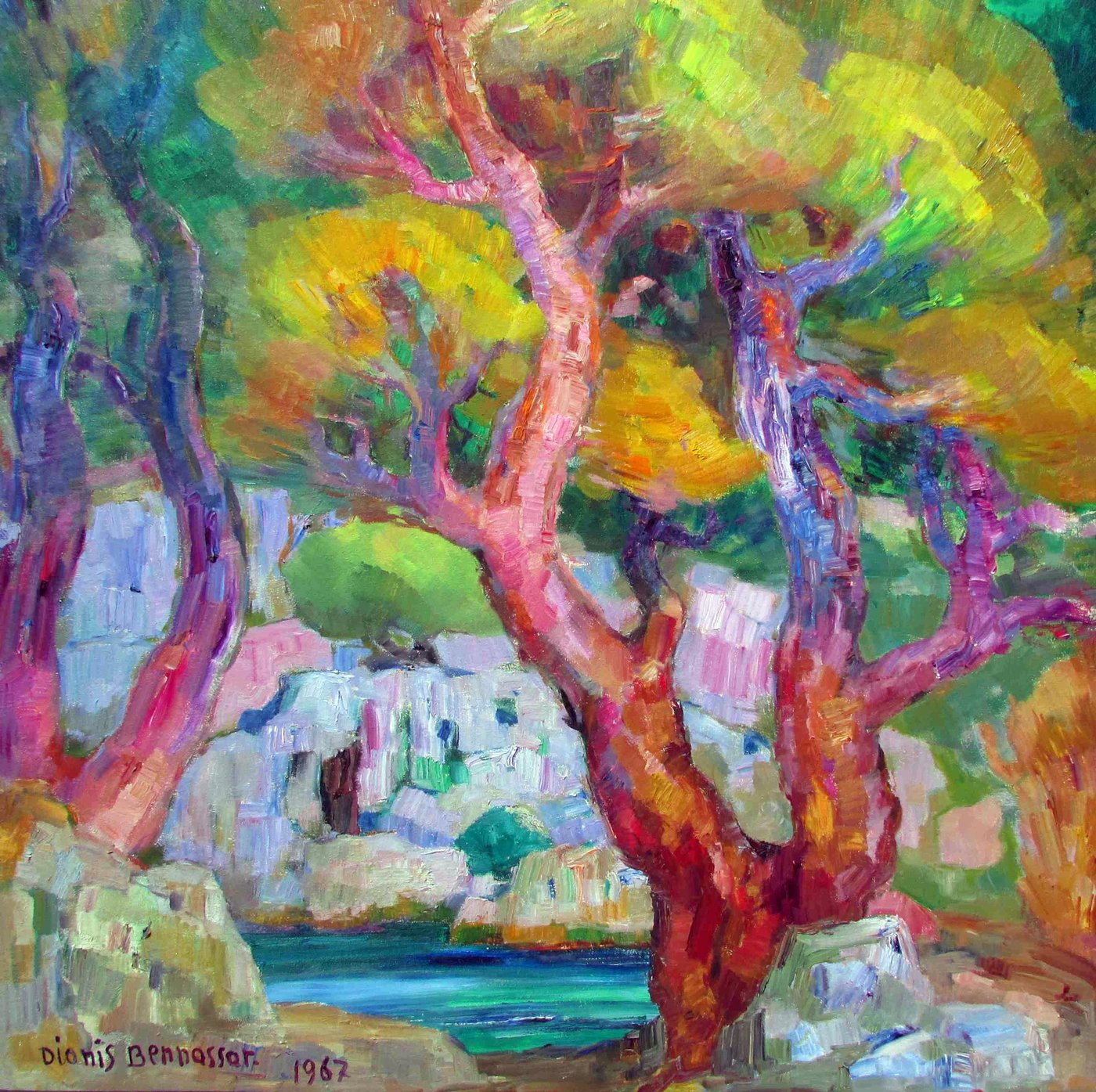
Dionís Bennàssar, pine trees over a cove, 1967
Oil · 1967

Pines over a cove

Dionís Bennàssar

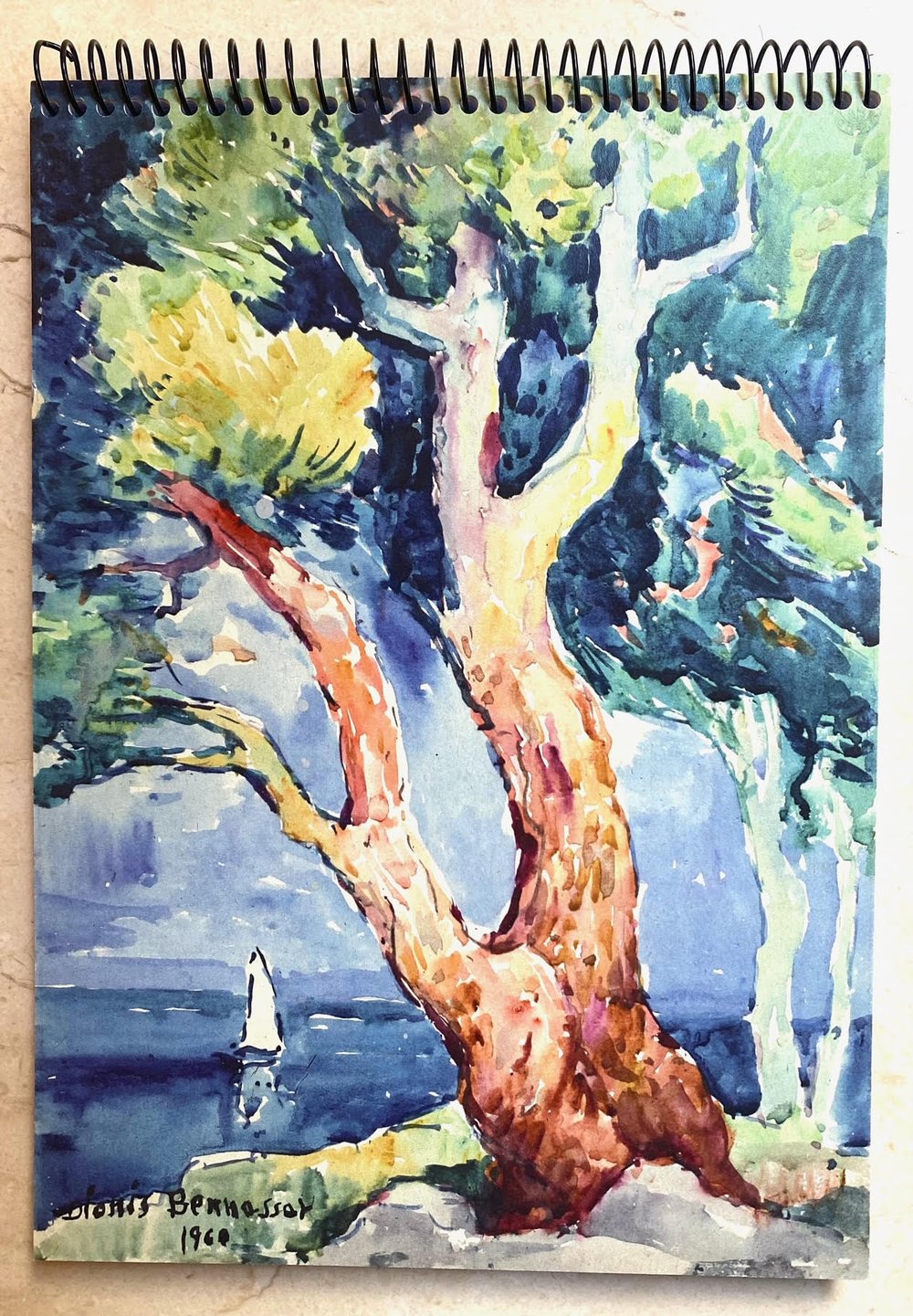
The pine appears throughout his work, one of his great recurring symbols of resistance and life, not the only one. He named it himself: a form shaped by the wind that attacks it, rooted in rock rather than soil, surviving at the exposed edge. He dedicated his autobiographical notes to his son as Flor de Pi, flower of the pine, linking the family to Miquel Costa i Llobera's El Pi de Formentor, and claiming for a peasant's son the same symbolic vocabulary as Pollença's canonical poet.

III · Colour and Matter

A method, not just a style

He knew Cézanne, Van Gogh, Seurat and Gauguin through a small collection of illustrated books, and took something specific from each.

The art historian Martí Xavier March Cerdà gives the clearest account: Bennàssar deformed the figure, as Van Gogh did, to express a feeling; added an element to a landscape, as Seurat did, because the composition's balance required it; changed the colour of things, as Cézanne did, because the first mass of pigment laid down demanded particular harmonies; and enthroned technique, as Anglada did, in pursuit of a splendidly beautiful result.

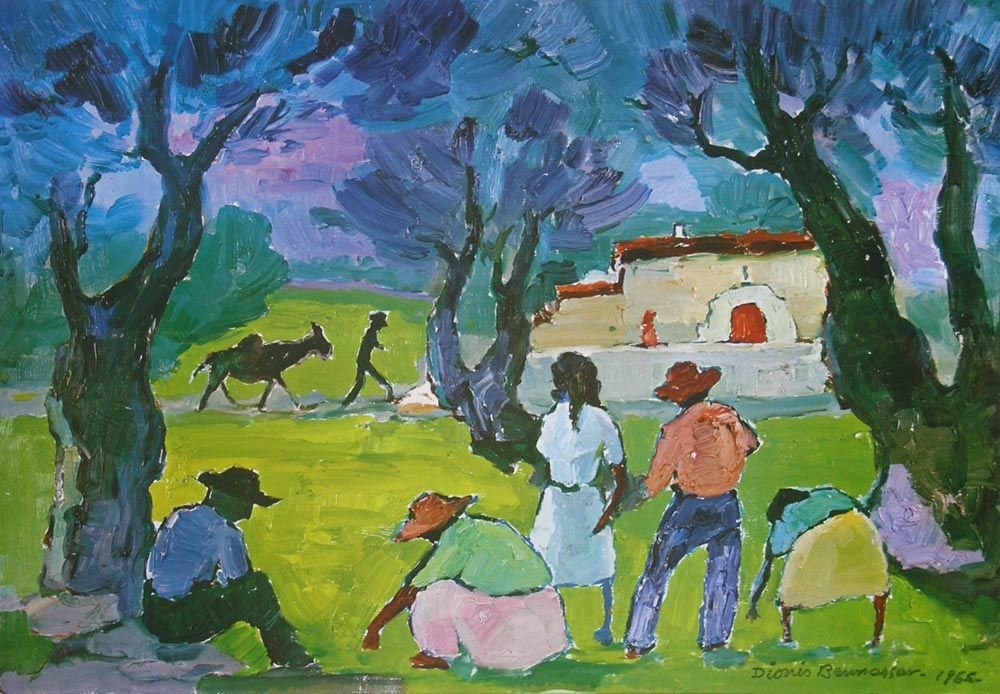
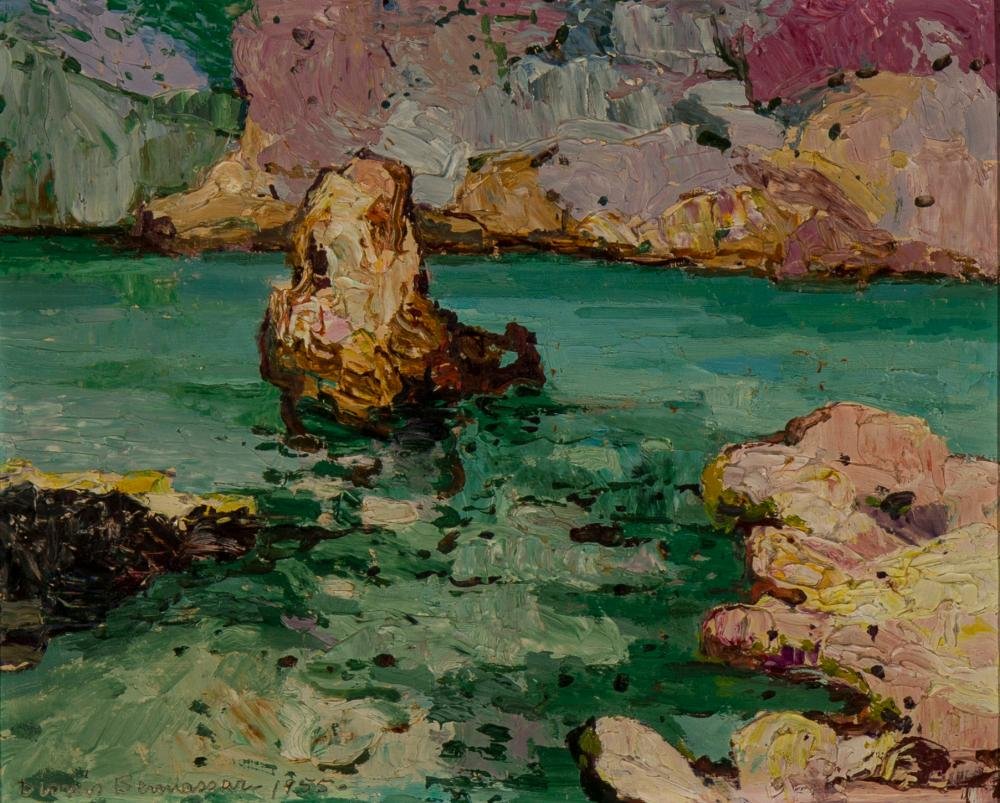
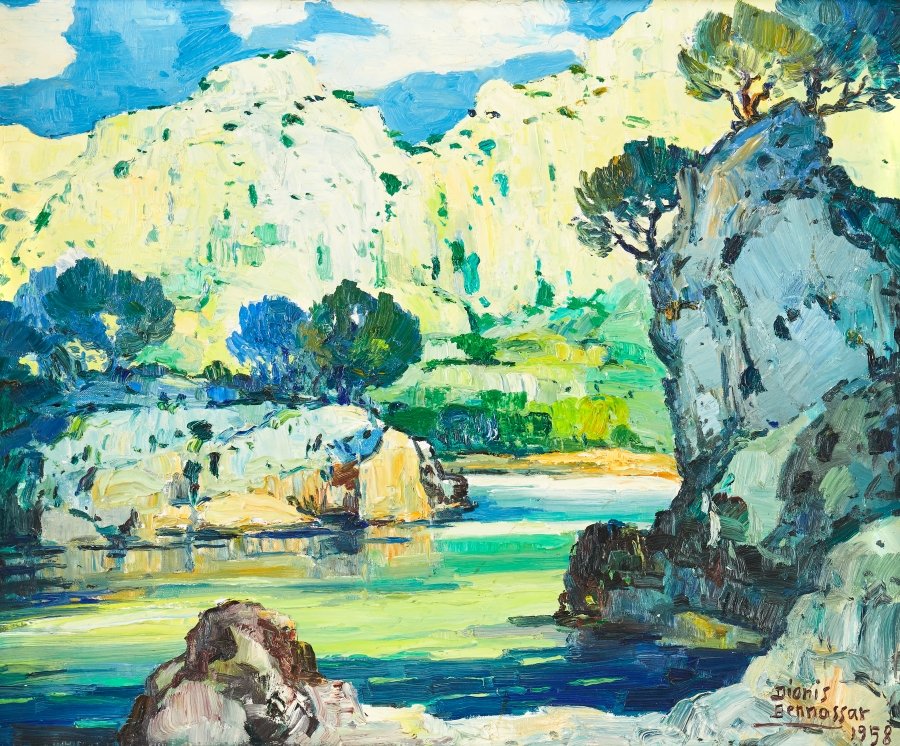
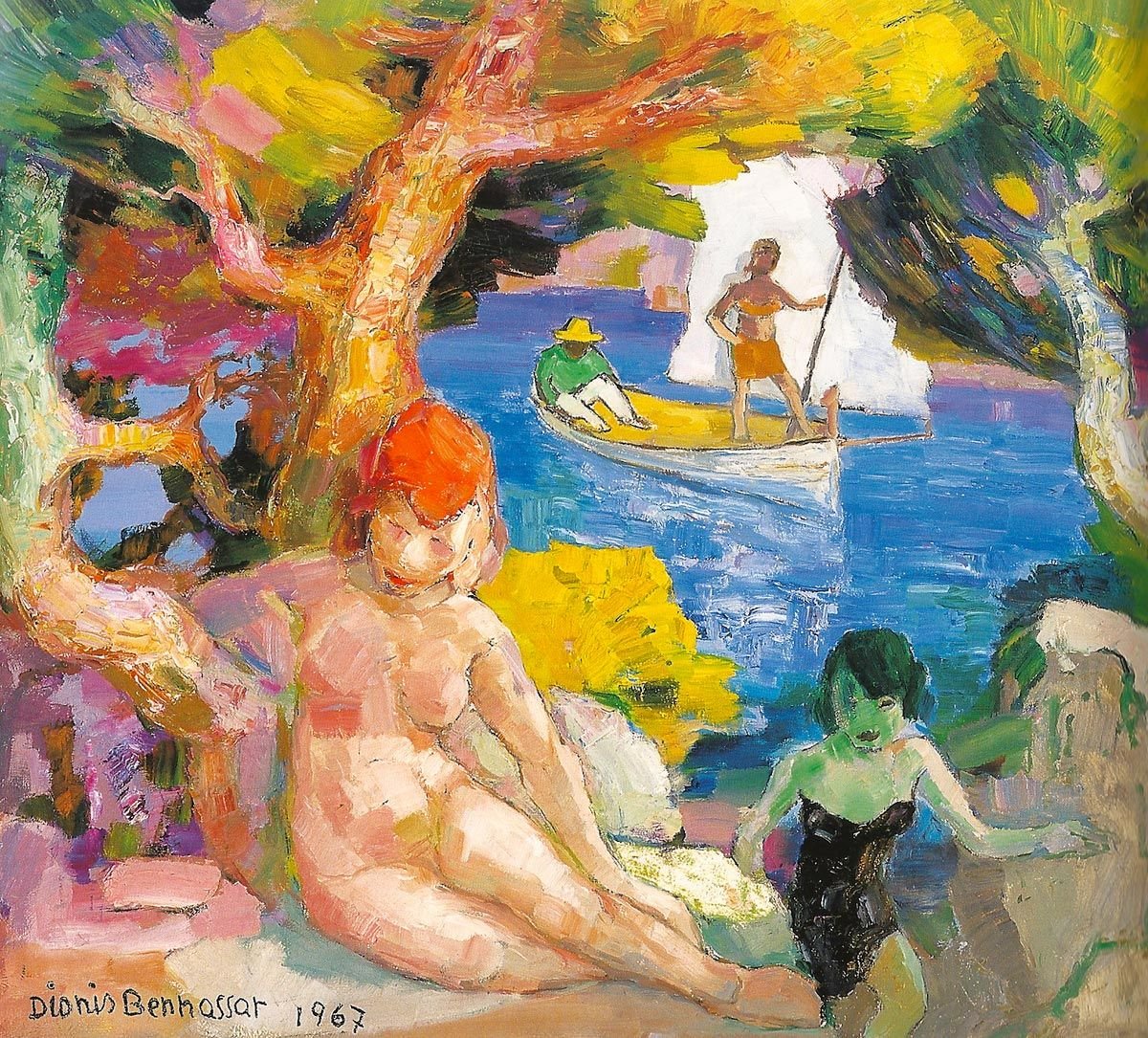
That third point is the technically decisive one. Colour decisions are generated by the painting itself rather than by the subject: once the first mass of pigment is down, what follows answers to what that mass requires, not to what the landscape reports. This is the mechanism, not a distortion of observation, by which green figures and cobalt trees appear. The directors of the Museu de Pollença put it as a question: who else painted green figures?

His surfaces could become extraordinarily physical, colour, texture and brushwork accumulating into a material presence that catches the changing light rather than merely describing it. Fernando Schwartz, writing in 2017, described the effect as fixing the surrounding richness in the palette like small mounds of pure, pasty colour. Light in such a painting isn't represented. It's caused, by the physical interaction of real light with the topography of dried paint.

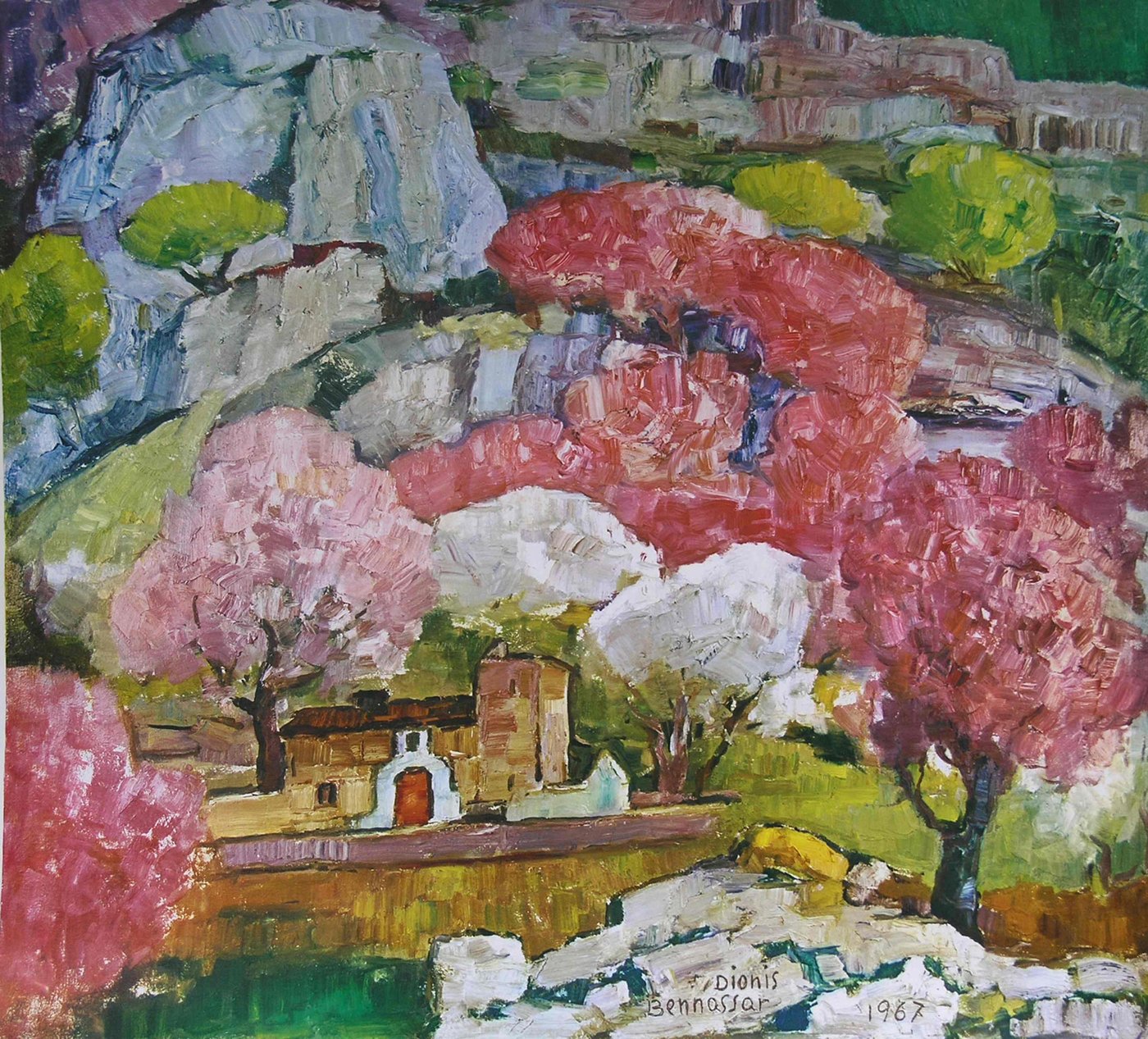
Dionís Bennàssar, almond blossom near Pollença, 1967
Oil · 1967

Almond blossom, Pollença

Dionís Bennàssar · from the almendros series

The almond blossom paintings received his most attentive treatment across three decades: Almendros de mi pueblo (1947), Canción de febrero (1963), and the sínia paintings where the trees form a court of honour around the waterwheel. Rabassa describes the mule's tired walking lending the landscape "a sense of perfumed eternity."

IV · Subject

The inventory of a working life

Roughly a thousand works, across categories that resist any single label for what he painted.

Rustic landscape

Vall d'en March, Puig Tomir, Flor de Olivo, Pagesia; exhibited 1945–1949.

Marines

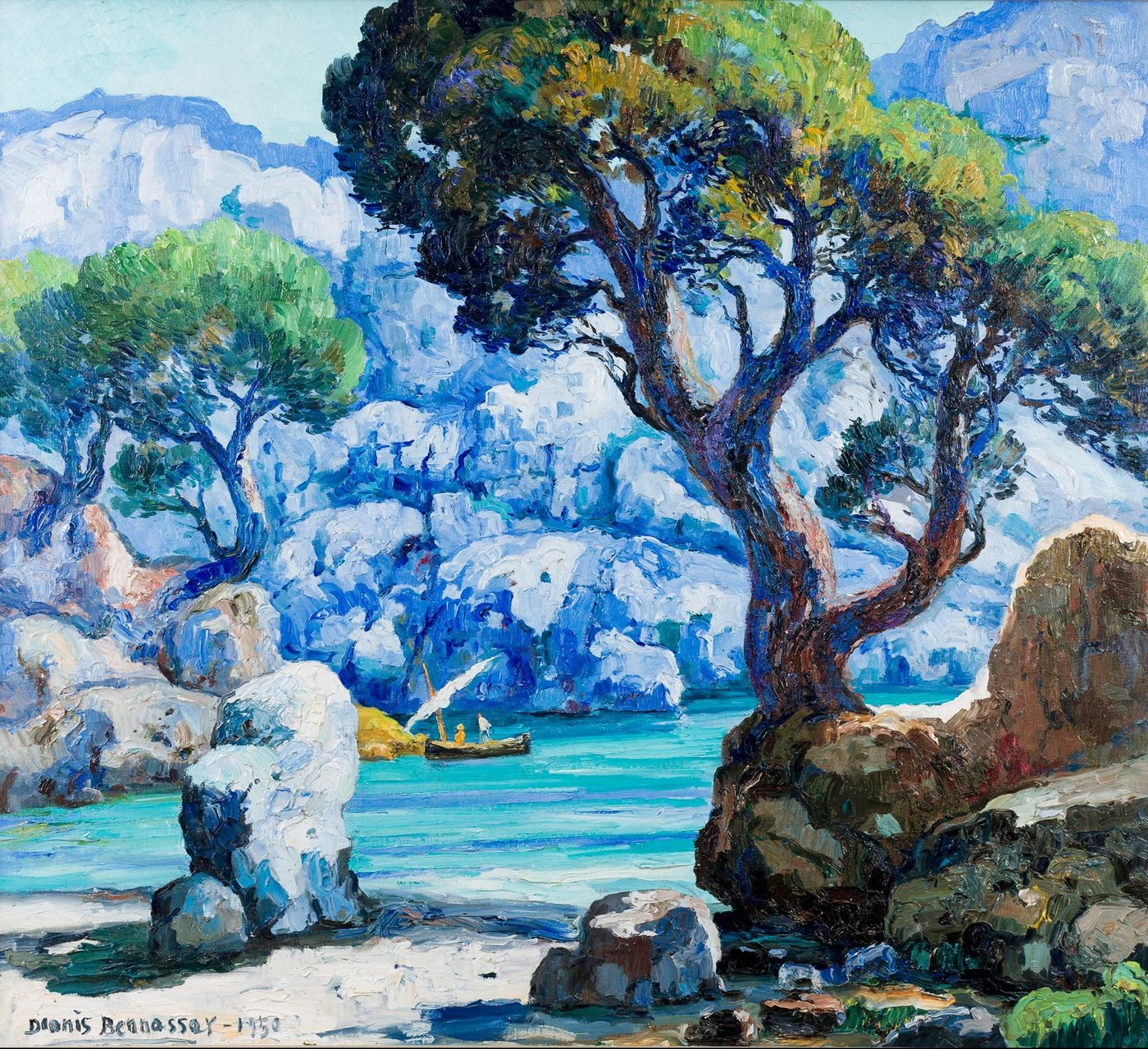
Cala Verde, Cala Clara, Costa Brava, Castell del Rei; praised for serenity and opulence.

Almond blossom

Almendros de mi pueblo, Noria y almendros en flor; a lifelong recurring subject.

Custom & legend

Nuredduna, Canción de las Águilas; also drawn for Setmana Santa programmes.

Portrait

Mn. Costa (1954), self-portraits, family; often given away to the sitter.

Folk dance

La danza del viento, Los pollensines; schematised, Goya-like, without concession to the gallery.

Still life

Bodegón, Flores; what Rabassa calls a Franciscan love of simple things.

Urban landscape

Plaça de Pollença, Mercado, Nieve (1956); the town itself as subject.

Myth & the fantastic

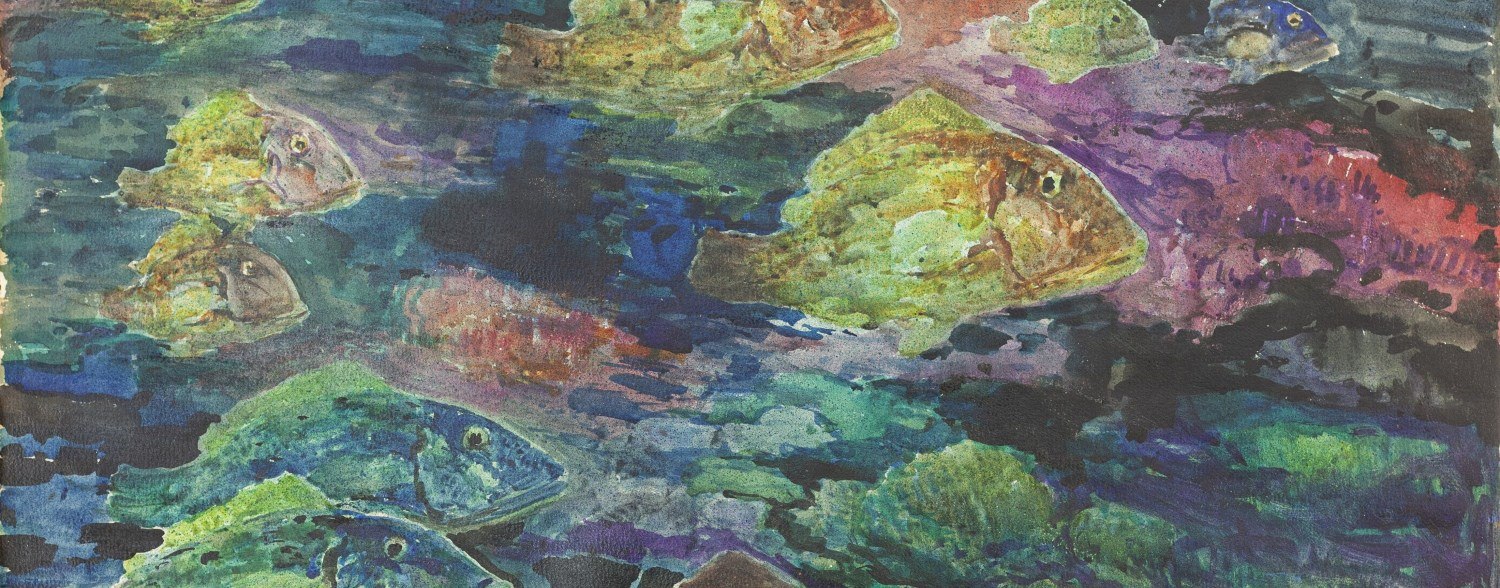
Underwater and mythological imagery, erotic drawings and caricature, in notebooks Aligi Sassu called the unexplored key to the work.

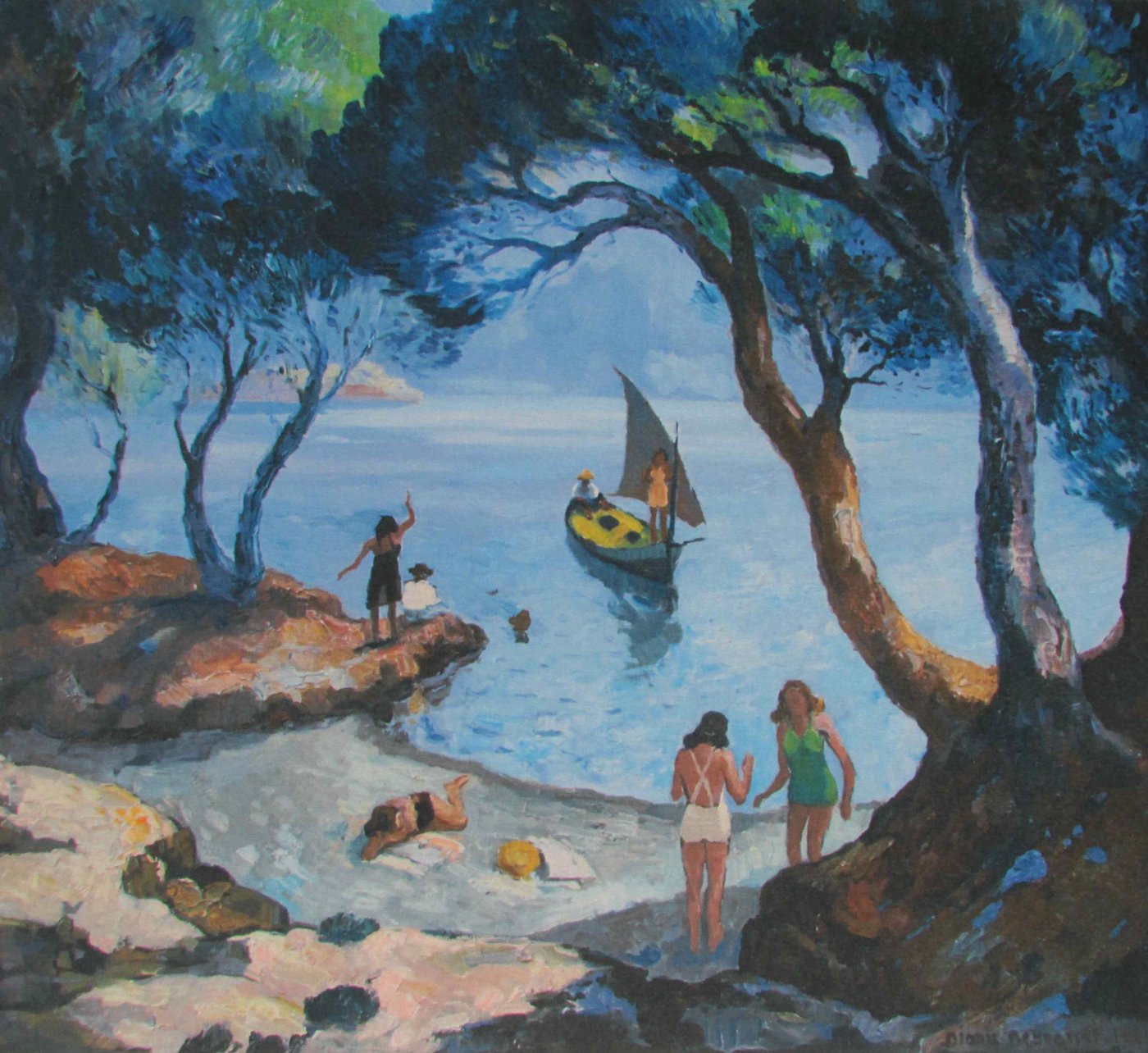
Dionís Bennàssar, bathers at Formentor
Oil

Bathers, Formentor

Dionís Bennàssar

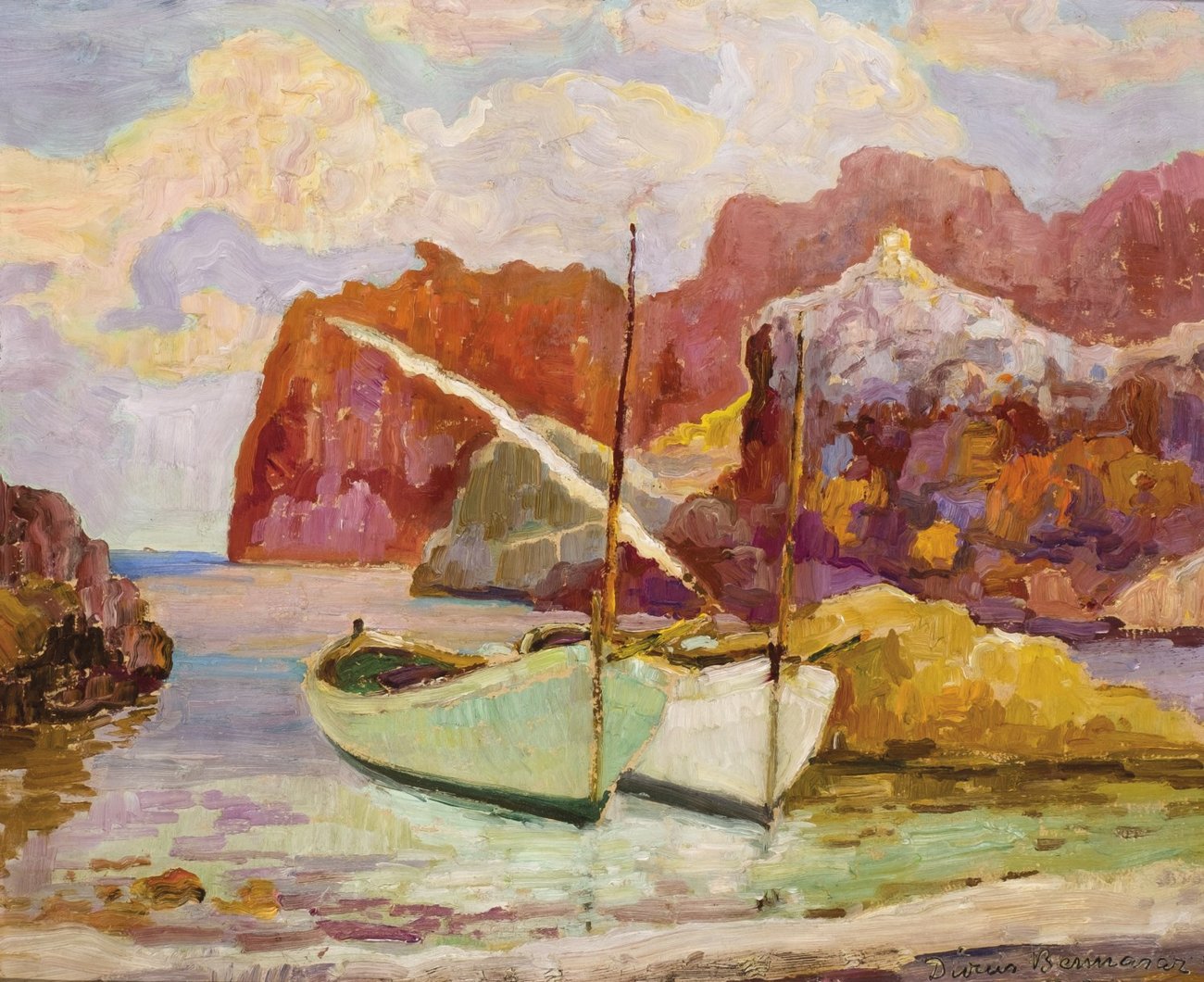
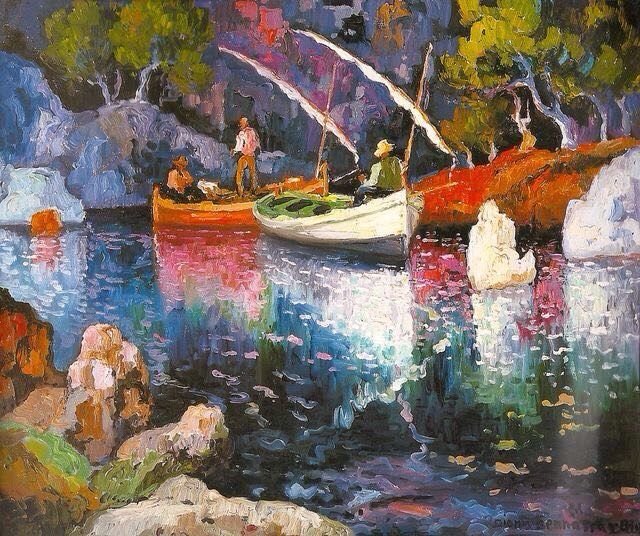
He summered with his family at Port de Pollença and Cala Sant Vicenç, going out in fishermen's boats, particularly with the Durai family, who would leave him on a rocky spot to paint and collect him on the return. The marine paintings that resulted were singled out for their intimacy rather than their drama.

V · The Circle

Native counterpart, not local outsider

By 1926, Pollença could be spoken of as a mecca of painters: Haes, Mir, Rusiñol, Sorolla, Anglada, Cittadini.

Into this Bennàssar returned from military hospital, an invalid with a pension and no profession. What happened next is the part of the story worth telling properly: he was not the local man standing opposite the foreign artists. He was inside that environment. The relationship with Tito Cittadini, established at l'Horta pollencina in Anglada's wake, became the single most consequential artistic friendship of his life, beginning around 1926 and lasting, by Lladó's account, thirty-four years until Cittadini's death in 1960.

The asymmetry between them is worth stating plainly. Cittadini had chosen Paris, chosen Anglada, chosen Mallorca: every stage elective. Bennàssar had refused the Theatines, been expelled from Palma, been conscripted, been shot, been pensioned. Nothing in his formation was elective except the decision, taken on a hospital bed in Larache, to paint at all. What passed between the two men was not a transfer of privilege but of permission: from a painter who had seen Paris, that colour could be handled the way Anglada handled it.

He exhibited alongside Anglada and Cittadini at the first Saló de Tardor in 1929, opened his first individual exhibition at Galeries Costa in 1934, and by 1940, the pivot Lladó identifies in titles like Sendera de llum, path of light, was showing on the same bill as both the founder of the Pollença circle and its most prominent disciple. He did not have to leave Pollença to enter the modern artistic world. The modern world came to Pollença, and he entered into conversation with it.

Nobody guided his left arm, clumsy at first; nobody told him that Greek statues are seven heads tall, nobody told him that trees are green and the sky is cobalt blue … but he knew how to forge his own canon and see what shone in his spirit.Tito Cittadini, 1940
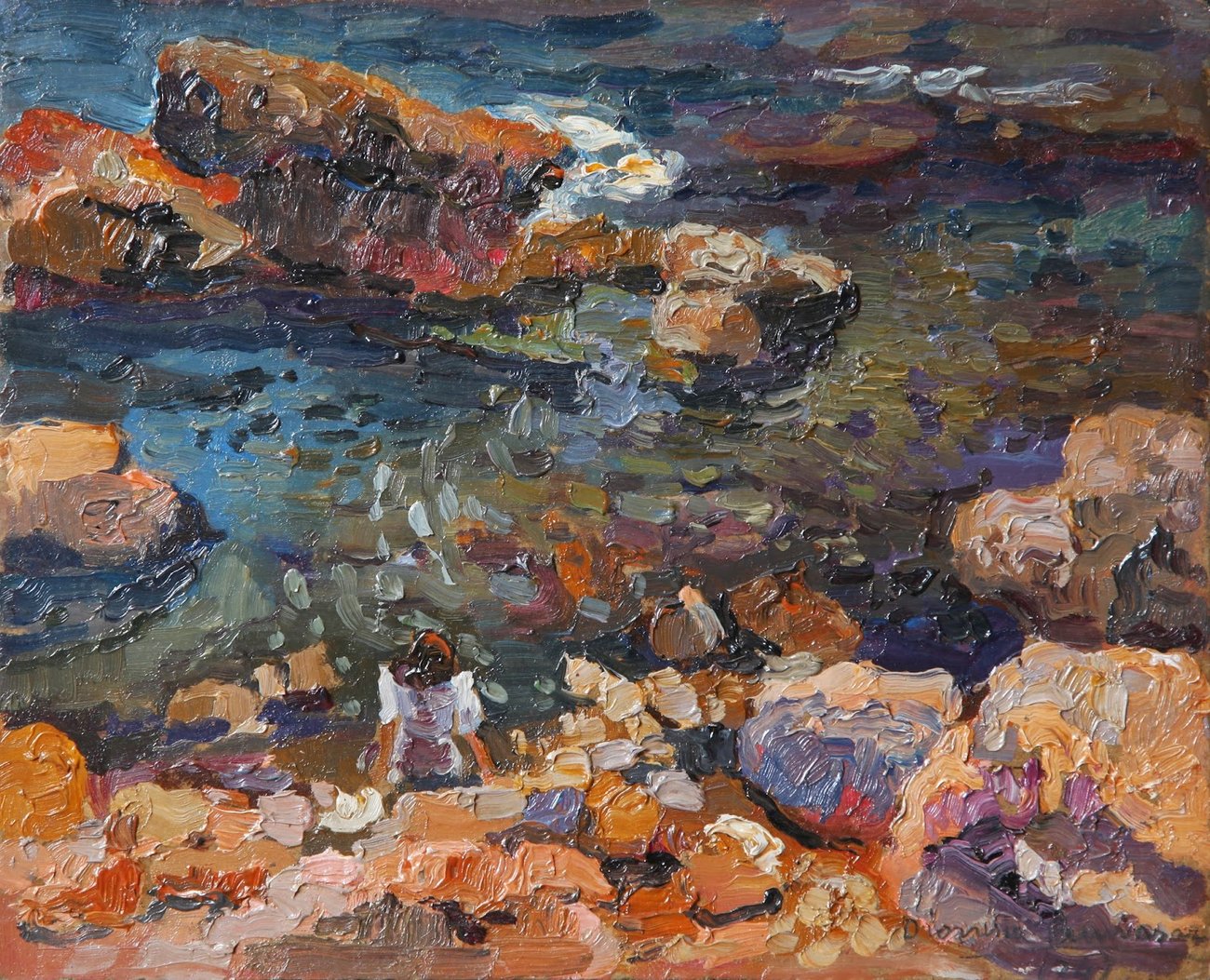
Dionís Bennàssar, harbour marine
Oil

Harbour marine

Dionís Bennàssar

Bennàssar was, by every account, curious about the world he had chosen not to travel through. His home became something of an intellectual meeting place: foreign publications, technology, visitors from outside Pollença. Rooted in the town without being confined by it.

VI · Home

The house, the family, the refusal to leave

In 1942 he bought the house he would live and work in for the rest of his life, now the Casa Museu Dionís Bennàssar. He married the pianist Catalina Vicens in 1943; their son Toni, born 1945, became a painter in his own right and founded the museum dedicated to his father's work.

His father he called El Pagès d'Or, the golden peasant: "although of gold he had only what he carried inside his heart." His mother died in 1923, the year of his enlistment, while he was in barracks; his brother Toni died the same year, immediately before he shipped to Morocco. Two deaths in the year of conscription, a bullet the year after: the sequence explains a great deal about the man who came home.

His house was, in his granddaughter's account, open from the humblest of the town to the most comfortable. He kept the tertúlia at the Bar Juma, was the first in the village to own a butane cooker and, later, a Vespa. Family testimony describes him declining opportunities to exhibit in Germany and the United States. The documentation is theirs, not independently verified, but the broader point stands regardless: he remained, by every account, extraordinarily rooted in Pollença despite an evident curiosity about everywhere else.

I live more among the pines than among the ridiculous social prejudices of men.

Not more than among men. More than among their prejudices. The tertúlias, the open house, the friendships with priests despite his own non-attendance at church. All of it sits beside, not against, the harder material in his diary. Both are his.
VII · Gallery

From the Casa Museu collection

The Golden Island

The painter Pollença made would not leave it.

The others who made this town famous came from elsewhere, and could always leave. He was the one produced by it, and he stayed, painting roughly a thousand works from a house that is now a museum, in a language of colour that owed nothing to an academy because no academy ever reached his hand.

He did not have to discover Pollença. He was formed by it, and looked back out at the world it showed him.

Primary sources: Bennàssar's own diary and autobiographical notes, family archive, Casa Museu Dionís Bennàssar.
Critical & biographical: Ramon Rabassa Ensenyat, Fills il·lustres de Pollença; Martí Xavier March Cerdà (1987); Francisca Lladó Pol; Pere Salas (2017); Catalina M. Bennàssar Bota; Aina Aguiló Bennàssar & Andreu Aguiló Díaz, Museu de Pollença; Fernando Schwartz (2017); Aligi Sassu (1992); Erotisme, Bruixes i Llegendes (2009).
Full sources and museum acknowledgments: /archive.